
Trench Box Information and Support
Steel and Aluminum Trench Boxes
Compare steel and aluminum trench boxes, review model-specific specifications and manufacturer tabulated data, and explore equipment options for utility and excavation work.
TECHNICAL SPECIFICATIONSNeed technical specifications? We've got you covered! Whether a project requires a trench box for underground utility work, pipe installation, excavation, road work, municipal repairs, or site development, Iron Lot assists in evaluating configuration options, reviewing tabulated data.
NEED A TRENCH BOX?We sell steel trench boxes, aluminum trench boxes, manhole boxes, spreaders, and related trench safety equipment. Our systems are built to meet the rigorous demands of contractors, utility crews, excavation companies, municipalities, and public works departments.
NATIONAL DISTRIBUTIONIron Lot is a nationwide supplier of trench safety equipment. We coordinate site-specific freight logistics to your jobsite. We can ship trench boxes direct to you from North Carolina, Ohio, Texas, and Calififornia.
Ready to compare models and pricing? Browse Iron Lot’s catalog of over 150 trench boxes or request a quote for your project.
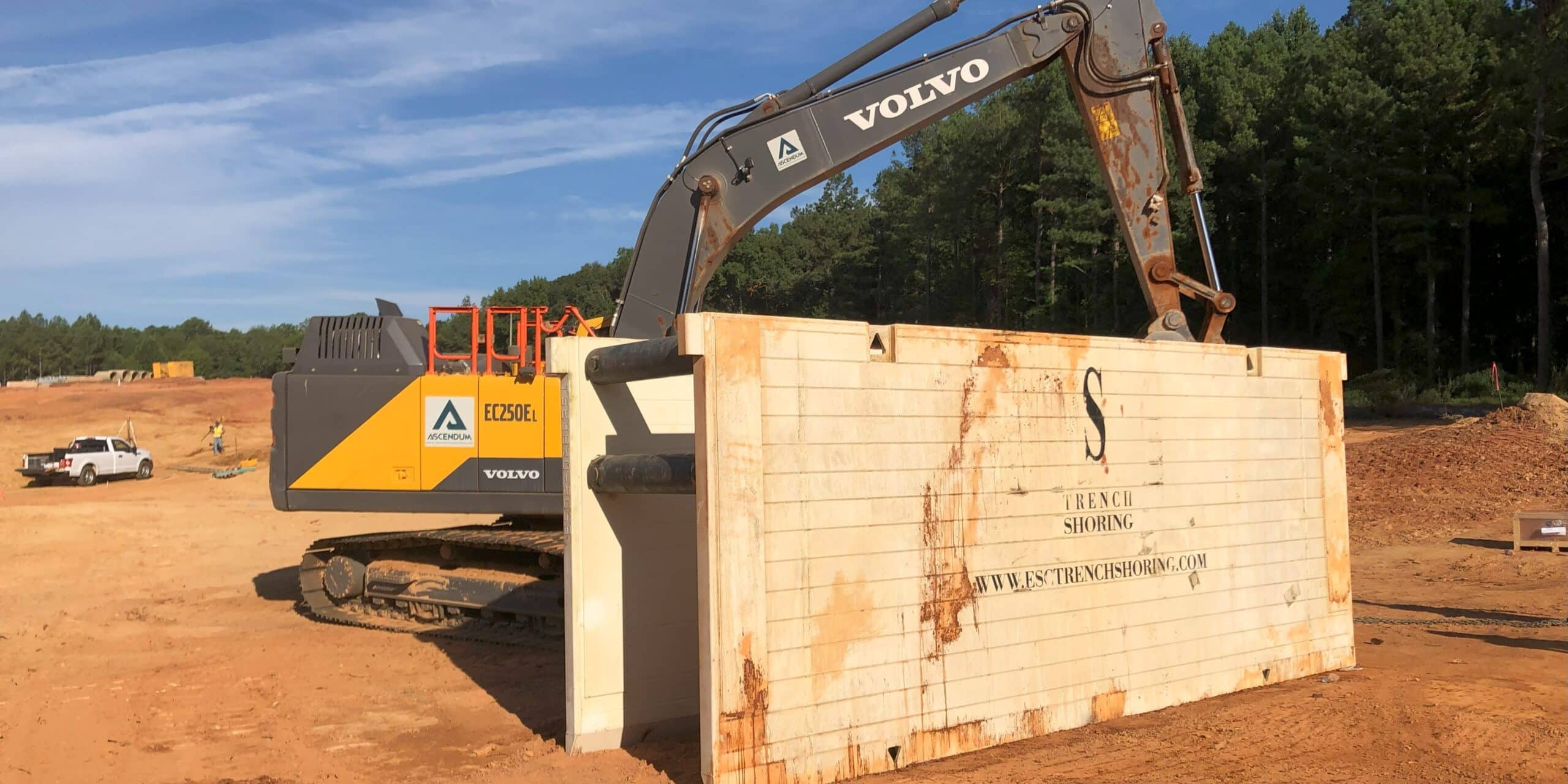
OSHA, Manufacturer Tabulated Data, and Depth Ratings

Registered Professional Engineer Stamp
Trench boxes should be selected and used according to OSHA 29 CFR 1926 Subpart P, manufacturer tabulated data, soil conditions, site conditions, surcharge loads, and competent person review.
Every trench box Iron Lot sells comes with manufacturer tabulated data specific to that trench box. The tabulated data includes depth ratings and other use limitations for that specific trench shield system.
This is important because trench box ratings are not universal. Ratings can vary by box design, size, configuration, soil conditions, surcharge loads, and other jobsite factors. Iron Lot does not list one universal depth rating on this page because each trench box must be reviewed according to its own manufacturer tabulated data.
Manufacturer tabulated data is part of proper trench box selection and use under OSHA 29 CFR 1926 Subpart P. Contractors should review the applicable tabulated data for the specific trench box being quoted or used.
The project’s competent person is responsible for evaluating trench depth, soil conditions, site conditions, surcharge loads, and other jobsite factors before selecting or using a trench protective system.
Trench Safety Resources
Choose the Right Trench Box for Your Project
Different excavation projects require different trench box options. Iron Lot supplies multiple trench box categories so contractors can match the equipment to the work being performed, available equipment on site, trench dimensions, jobsite conditions, and manufacturer tabulated data.
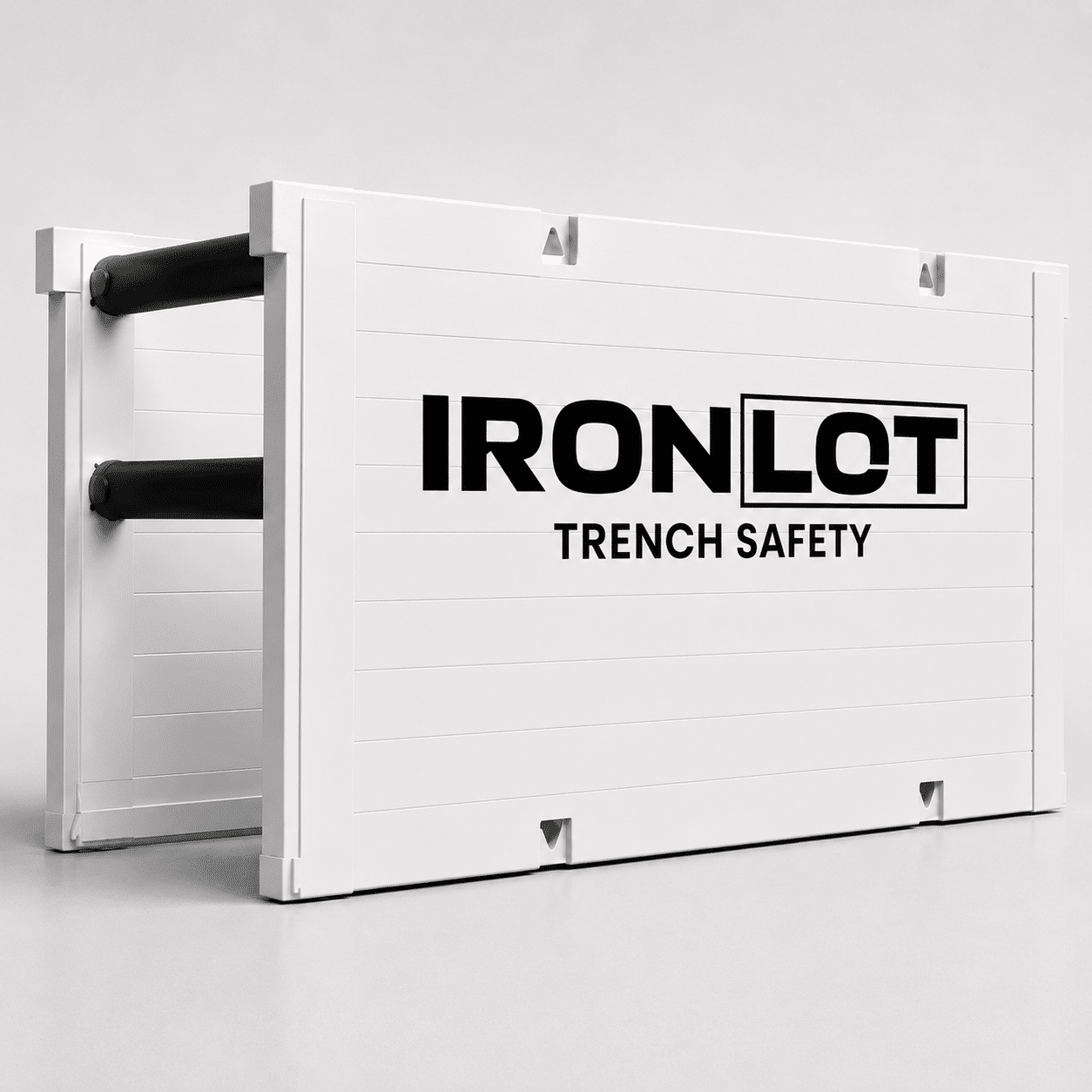
Steel Trench Boxes
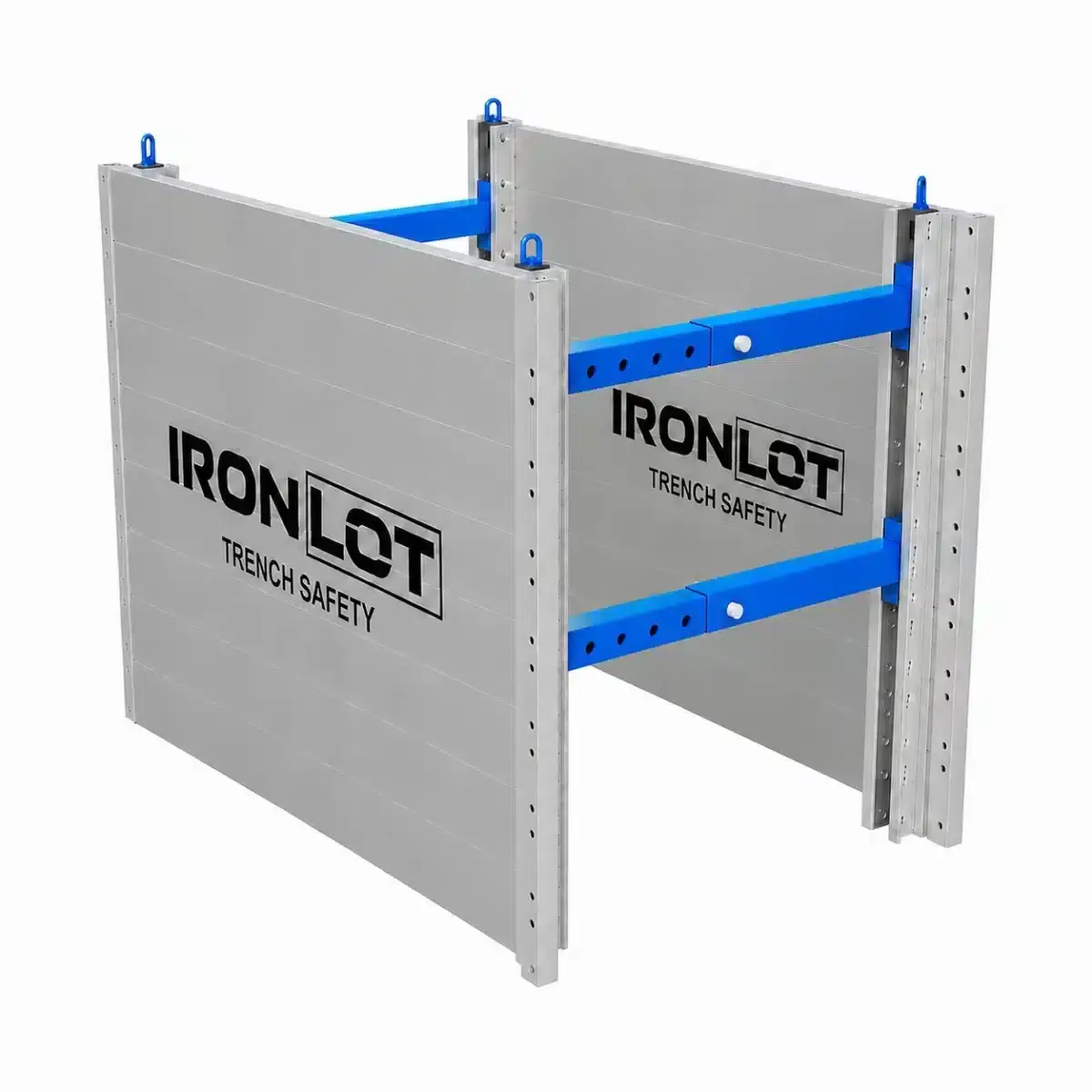
Steel trench boxes are commonly used for utility, excavation, sewer, water, road, and heavy construction projects. They are often selected for demanding jobsites where contractors need a durable trench shield for repeated use.
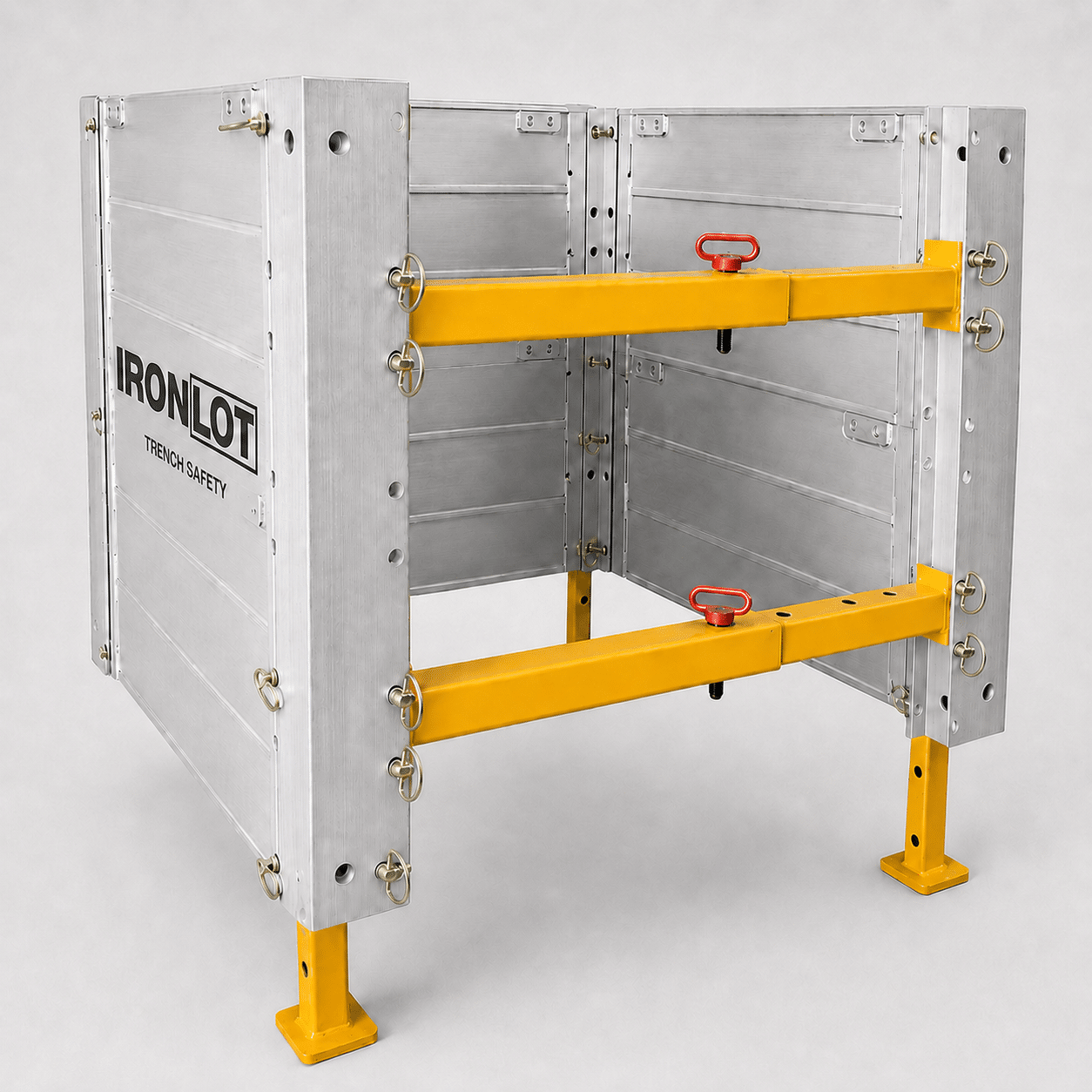
Aluminum Trench Boxes
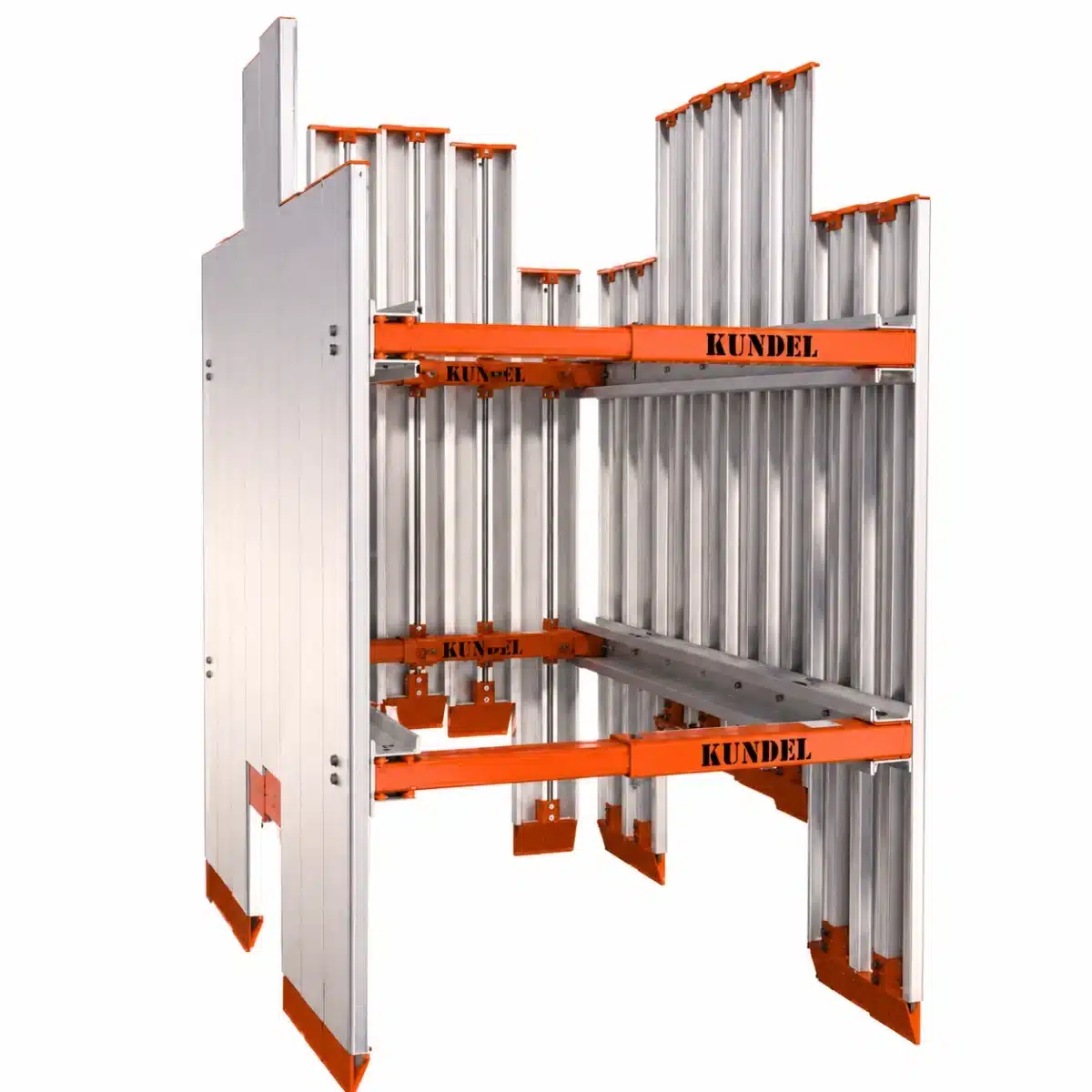
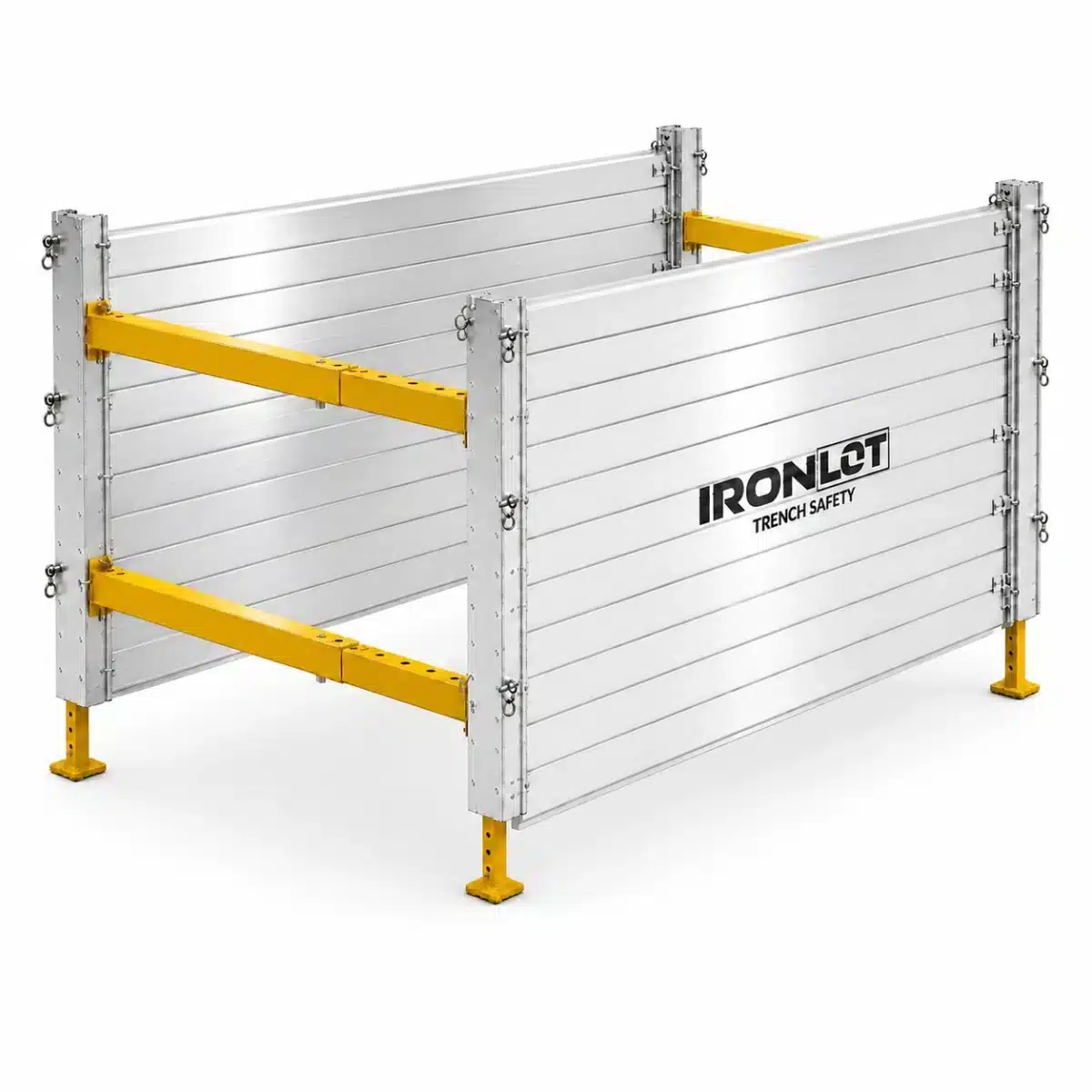
Aluminum trench boxes are commonly used where lighter weight, easier handling, and smaller equipment access are important. Contractors often consider aluminum trench boxes for utility work, spot repairs, and maintenance projects.

Manhole Boxes
Manhole boxes are used for excavation work around manholes, structures, utility connections, and pipe installation areas where access and configuration are important.
Trench Box Selection Factors
Selecting a trench box is not just a matter of choosing a size from a list. The correct trench box should be selected based on the work being performed, trench dimensions, site conditions, soil conditions, surcharge loads, manufacturer tabulated data, and competent person review.
Trench Depth, Width, and Length
Trench dimensions affect the trench box style, panel size, spreader width, and working room needed for the crew, pipe, and equipment.
Soil Conditions and Surcharge Loads
Soil conditions, nearby traffic, spoil piles, structures, and equipment loads can affect trench box selection and should be evaluated by the project’s competent person.
Spreader Width and Pipe Clearance
Spreaders set the working width between trench box panels. Pipe size, trench width, and clearance requirements should be considered when requesting a quote.
Steel vs. Aluminum Trench Boxes
Steel and aluminum trench boxes both serve important roles, but they are often used for different types of projects. The right choice depends on the project, trench dimensions, soil conditions, equipment available on site, tabulated data, and the competent person’s evaluation.
| Steel Trench Boxes | Aluminum Trench Boxes |
|---|---|
| Often used for heavier excavation and utility work. | Often used when lighter handling is important. |
| Common on sewer, water, road, and larger construction projects. | Common for utility maintenance, repair work, and smaller trenching projects. |
| Typically selected when durability and repeated use are major considerations. | Often easier to transport and handle with smaller equipment. |
Jobsite Conditions
Other OSHA Requirements That Affect Trench Box Use
Trench box placement is affected by the excavation itself. The competent person should review jobsite conditions before employees enter the trench and as conditions change throughout the shift.
4 Foot Rule: Access and Egress
Trenches 4 feet or more in depth require a stairway, ladder, ramp, or other safe means of egress positioned so employees do not have to travel more than 25 feet laterally to exit.
Read: Trench Safety Basics2 Foot Rule: Spoil Piles and Equipment
OSHA requires protection from materials or equipment that could fall or roll into the excavation, including keeping materials at least 2 feet from the edge or using suitable retaining devices.
Read: Understanding Trench HazardCompetent Person Inspections
A competent person must inspect excavations, adjacent areas, and protective systems for possible cave-ins, protective system issues, hazardous atmospheres, and other hazardous conditions before work begins and as needed throughout the shift.
View Competent Person Checklist
Common Trench Box Applications
Contractors use trench boxes across many types of excavation and underground utility projects, including sewer and water line installation, storm drain and pipe installation, road and street work, municipal projects, site development, utility maintenance, manhole work, and excavation projects requiring trench protective systems.
The trench box selected for a project should match the trench dimensions, soil conditions, work area, equipment being used, manufacturer tabulated data, and applicable jobsite requirements.
Industries We Serve
Underground Utility Contractors
Iron Lot provides technical tabulated data, trench boxes and related equipment for underground utility contractors working on sewer, water, storm drain, gas, electrical, and communication utility projects.
Municipalities and Public Works Departments
Municipal and public works crews often need trench safety equipment for water line repairs, valve work, storm drainage, sewer maintenance, and utility repairs.
Excavation Contractors
Excavation contractors use trench boxes across site development, utility installation, road work, and infrastructure projects. Iron Lot helps compare steel and aluminum options.
Commercial Site Development Contractors
Commercial site development projects often require trench boxes, bedding boxes, road plates, and support equipment to keep excavation and utility installation moving.
Plumbing, Mechanical, and Utility Repair Crews
Plumbing, mechanical, and utility repair crews may need compact trench box options for spot repairs, service connections, conduit work, and shallow utility cuts.
Project Managers and Buyers
Project managers and purchasing teams can contact Iron Lot for technical tabulated data, quote support, current pricing, availability, freight coordination, financing options, and related equipment.
Product Catalog
Browse Trench Safety Equipment
View Iron Lot trench boxes, trench shields, spreaders, bedding boxes, road plates, manhole boxes, and related equipment for excavation, utility, and public works projects.
OVER 150 TRENCH BOX OPTIONS, PLUS OTHER TRENCH SAFETY EQUIPMENT
Steel Trench Shield Systems
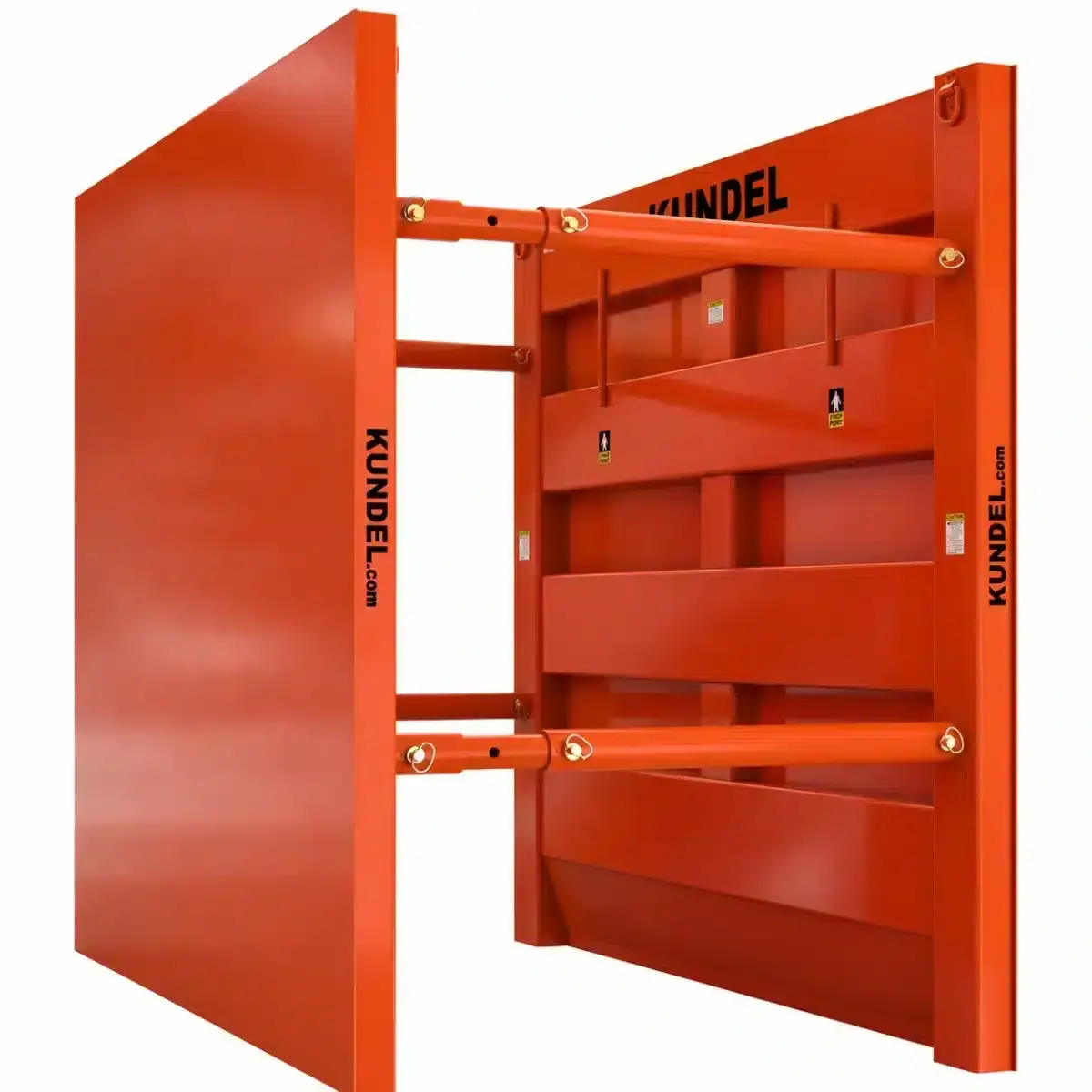
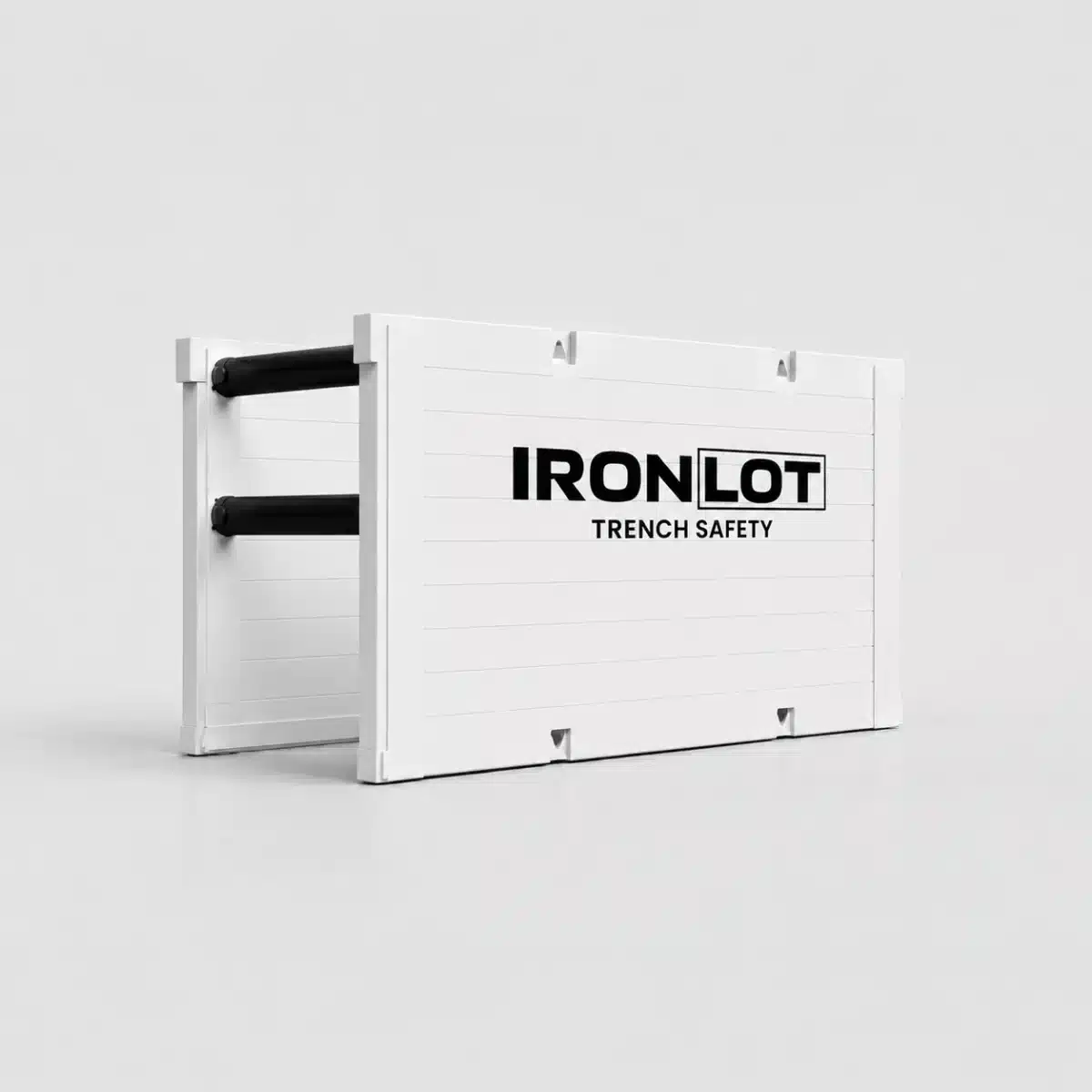
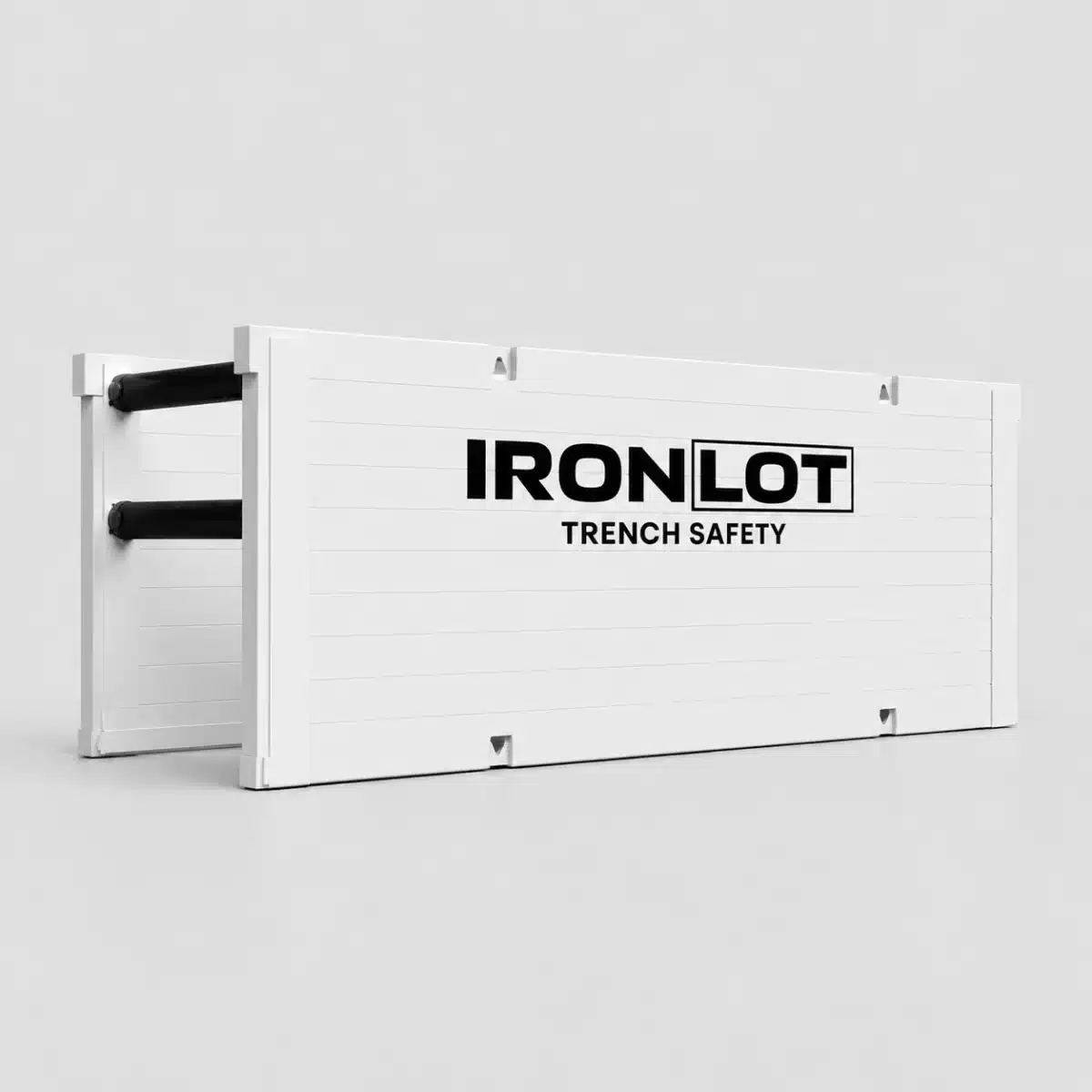
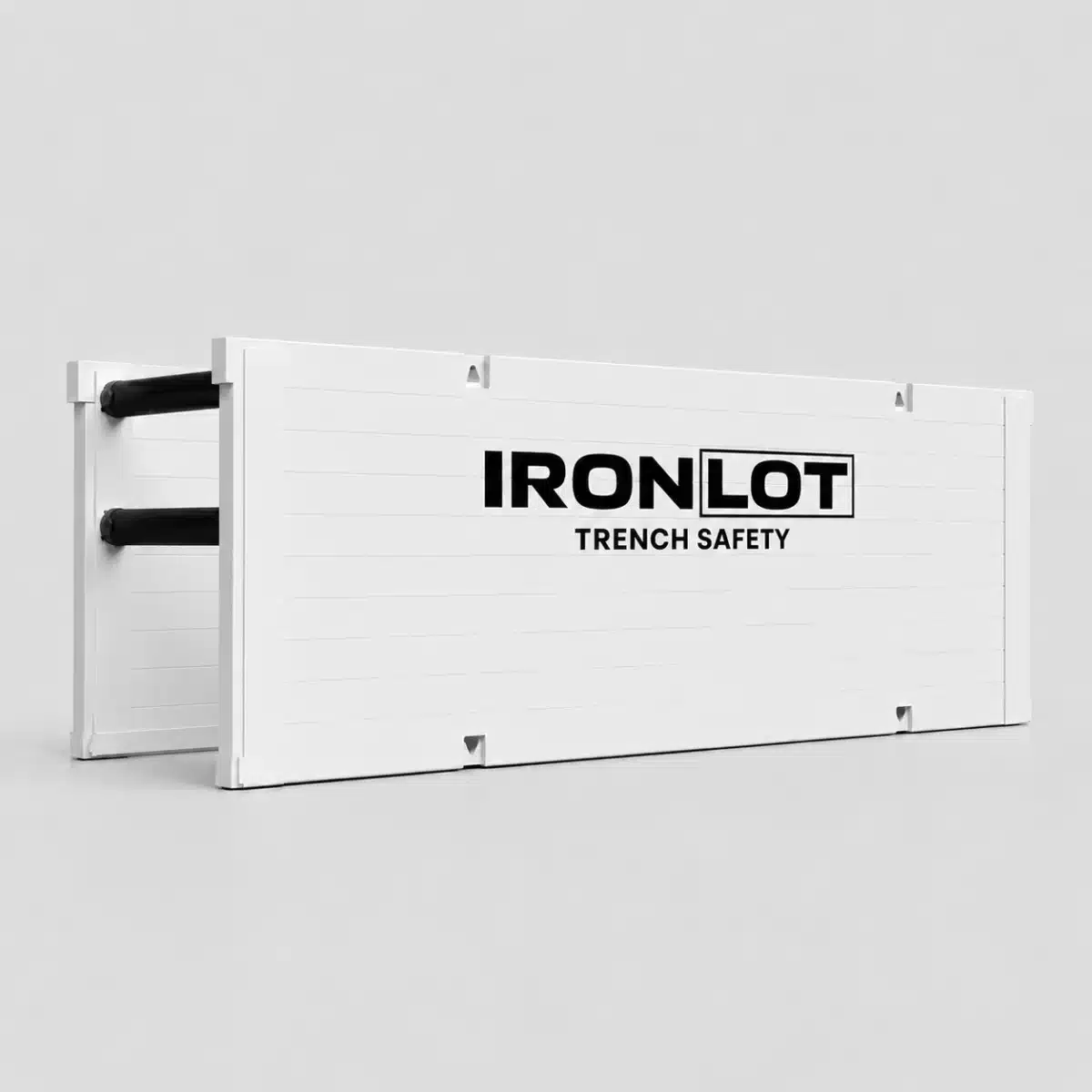
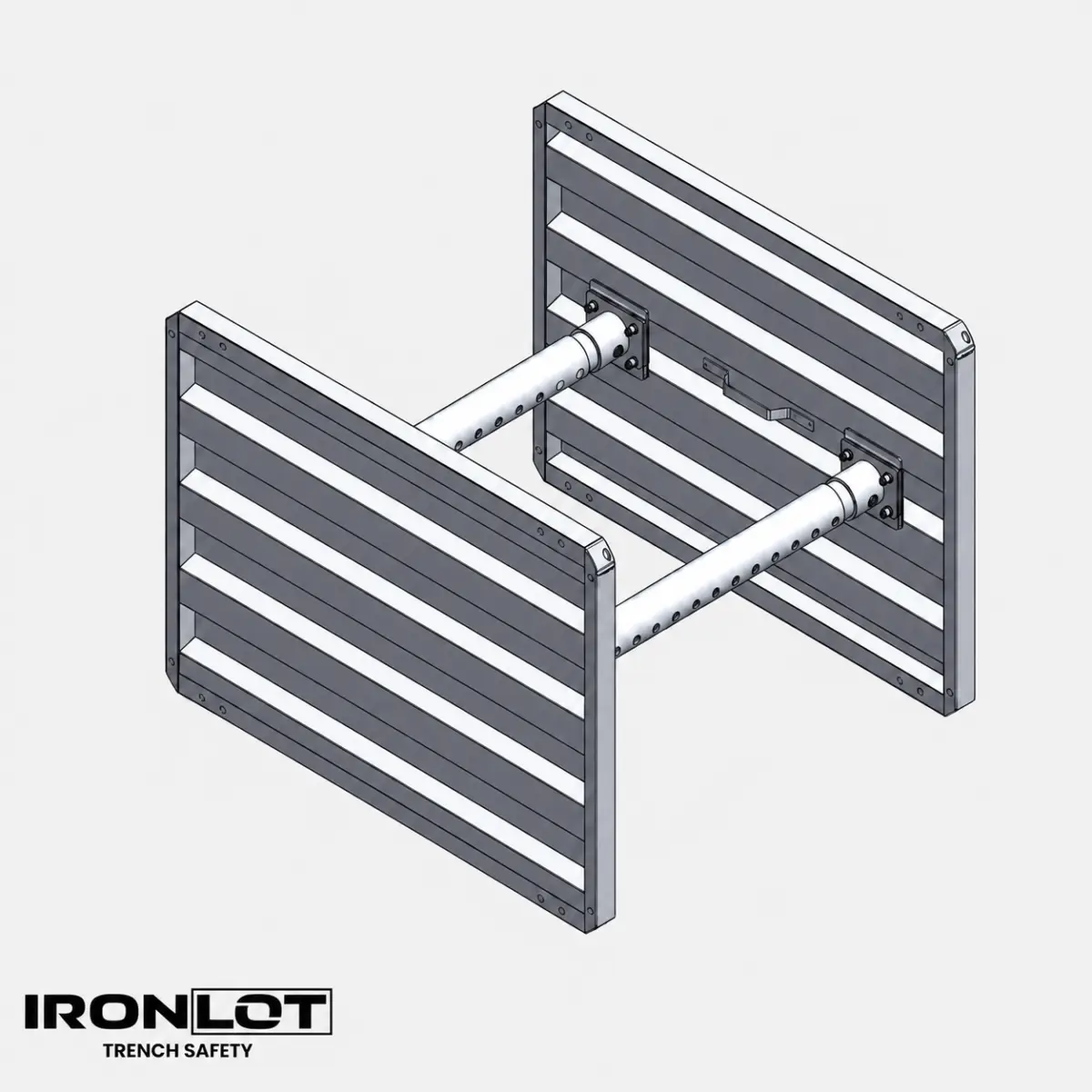
Modular Aluminum Shoring & Panel Configurations
We Make Getting Technical Tabulated Data Information and Quotes Easy
Iron Lot is a trench safety equipment supplier focused on helping contractors review practical equipment options for jobsites. This page is the main informational hub for trench boxes, including steel trench boxes, aluminum trench boxes, manhole boxes, spreaders, bedding boxes, road plates, trench plates, and related jobsite equipment.
If you already know the type of trench box you need, use the quote form below or call Iron Lot at 336-516-8011. If you are still comparing options, this page can help you understand the major trench box categories, quote requirements, tabulated data considerations, and related equipment commonly used on excavation and utility projects.
Request Current Pricing and Availability
Request a Custom Trench Box Quote
Need a steel trench box, aluminum trench box, manhole box, spreaders, or related trench safety equipment? Send Iron Lot your project details and we can help you review available options, current pricing, freight considerations, and quote support.
To help us quote the right trench box, please include as much information as possible:
- Trench depth, width, and length
- Job location or delivery ZIP code
- Steel, aluminum, manhole box, or unsure
- Required spreader width, if known
- Project timeline
- Shipping or delivery needs
- Whether manufacturer tabulated data is needed for review
Every trench box Iron Lot sells comes with manufacturer tabulated data specific to that trench box, including depth ratings and a stamp from a registered professional engineer.
Call Iron Lot at 336-516-8011 if you would rather discuss your project by phone.
Get a Trench Box Quote
Nationwide Freight and Delivery Support
Iron Lot helps coordinate freight and delivery for trench boxes, manhole boxes, road plates, bedding boxes, and related trench safety equipment. Depending on the equipment type, size, and destination, orders may ship from regional supplier locations to help reduce transit time and freight cost.
- Smaller and modular equipment: Smaller trench boxes and modular aluminum systems may often ship by enclosed freight when practical.
- Larger trench safety equipment: Larger trench boxes, manhole boxes, bedding boxes, and steel road plates are typically coordinated by LTL or FTL freight depending on size, weight, destination, and jobsite needs.
Related Equipment for Trench and Utility Work
Many trench and utility projects require more than the trench box itself. Iron Lot can help contractors source related equipment used for material handling, access, temporary trench coverage, and excavation support.

Bedding Boxes
Bedding boxes help stage bedding stone, gravel, and backfill material near the trench so pipe crews can keep material organized and close to the work area.
Road Plates
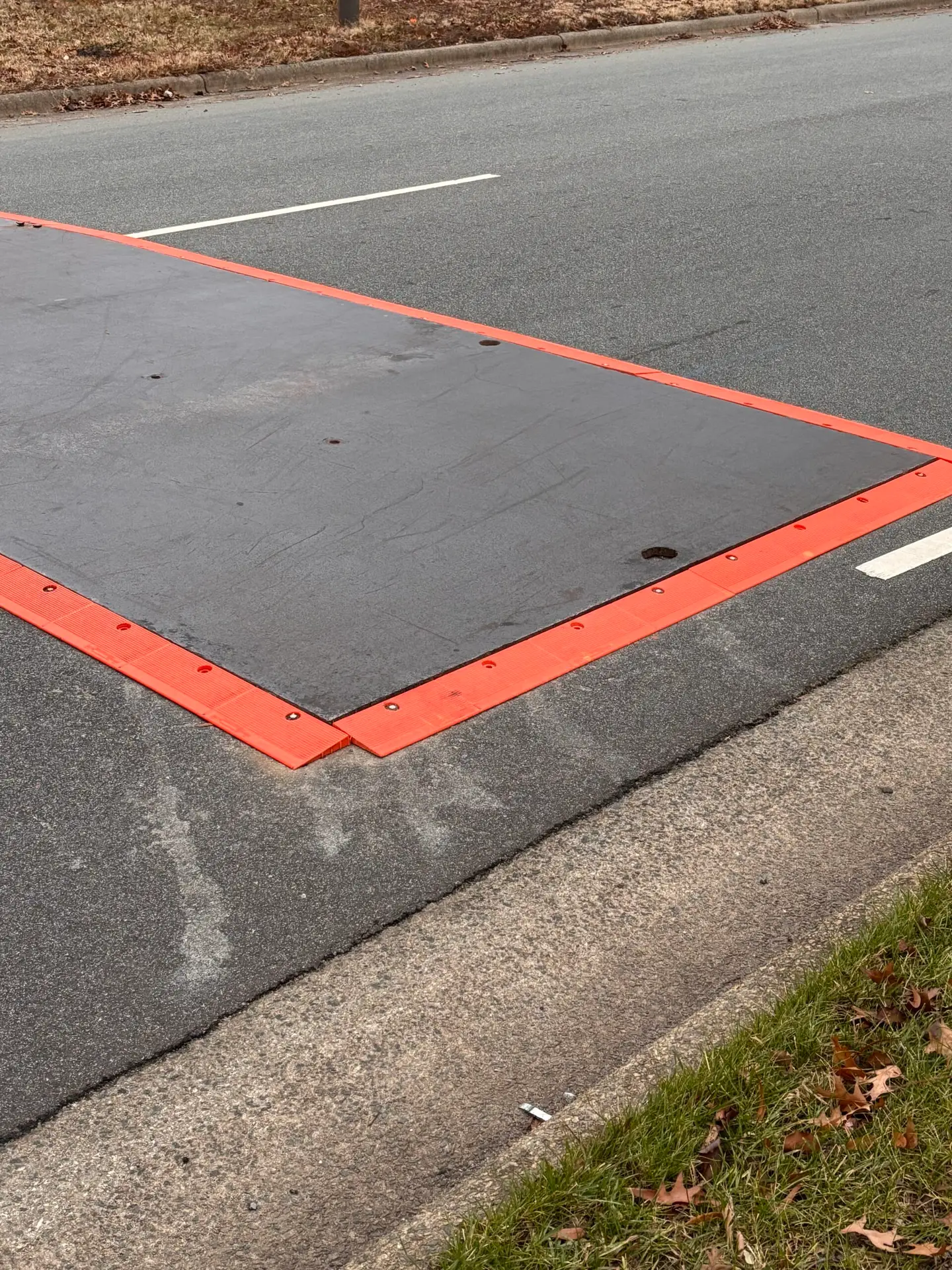
Steel road plates are used for temporary access, utility cuts, trench coverage, and traffic support during road, utility, and excavation projects.
Product Catalog
Browse Iron Lot trench boxes, trench safety products, and related equipment for excavation, utility, and public works projects.
View The Equipment CatalogTrench Box FAQs
What is a trench box?
A trench box (also known as a trench shield) is a heavy-duty safety structure placed inside an excavation to protect workers from soil cave-ins and trench collapses. Unlike active shoring systems that hold back dirt walls, trench boxes act as a passive shield to safeguard utility, sewer, and pipeline crews in the event of a sudden wall failure.
To comply with OSHA regulations, trench boxes must be selected and deployed based on manufacturer tabulated data, current soil conditions (Type A, B, or C), and a formal review by the job site's designated Competent Person.
Are trench boxes and trench shields the same thing?
Yes. In daily construction and utility conversations, contractors use the terms "trench box" and "trench shield" interchangeably to describe the same protective equipment. Technically, a box is a specific configuration of a shield system—typically featuring two flat steel or aluminum sidewalls held apart by spreaders to create a safe workspace.
However, neither system should be confused with active trench shoring. While trench boxes/shields act as a passive barrier to protect workers from a cave-in, active shoring uses hydraulic pressure to actively push against dirt walls to prevent the soil from moving in the first place.
What is the difference between trench shoring and a trench box?
The main difference is that trench shoring helps prevent cave-ins by actively supporting the trench walls, while a trench box is designed to shield workers if a cave-in occurs.
- Trench Shoring — Active Protection: Trench shoring uses hydraulic pistons, pneumatic cylinders, mechanical jacks, or other support systems to apply outward pressure directly against the trench walls. This helps prevent the soil from moving or collapsing, which can be especially important when working near foundations, roads, structures, or active utilities.
- Trench Boxes — Passive Protection: Trench boxes do not hold up the trench walls or prevent soil from collapsing. Instead, these heavy-duty steel or aluminum structures sit inside the excavation and act as a protective shield around workers, helping protect them from the impact and weight of shifting or collapsing soil.
When is a trench box required? (The OSHA 5-Foot Rule)
Under OSHA standard 29 CFR 1926 Subpart P, a trench box or protective system is mandatory for any excavation that is 5 feet deep or greater, unless the trench is cut entirely into stable rock.
However, a trench box may still be required at shallower depths (less than 5 feet) if the job site's Competent Person examines the soil and determines there is an active hazard or indication of a potential cave-in. For excavations that reach 20 feet deep or greater, standard manufacturer tabulated data no longer applies, and the trench protection system must be custom-designed by a Registered Professional Engineer (RPE).
What is the OSHA 18-inch rule for trench boxes?
The OSHA 18-inch rule states that when a trench box is used in an excavation with sloped or benched upper walls, the shield must extend at least 18 inches above the top of the vertical trench wall.
This 18-inch clearance creates a critical safety barrier or toe-board. It prevents loose dirt, rocks, and excavated spoils from rolling over the sides of the box and falling onto workers inside the shield. However, if the trench walls are dug completely vertical up to the surface (unsloped), the top of the trench box can sit completely flush with the surrounding ground level, provided it safely meets depth rating requirements.
Do you sell both steel and aluminum trench boxes?
Yes. Iron Lot supplies both steel trench boxes and aluminum trench boxes. Steel trench boxes are often used for heavier excavation and utility projects, while aluminum trench boxes are often selected when lighter handling and transport are important.
How do I know what size trench box I need?
Trench box selection depends on trench depth, trench width, trench length, soil conditions, site conditions, the work being performed, OSHA requirements, and manufacturer tabulated data. The project’s competent person should review the conditions and confirm the appropriate protective system.
Do trench boxes come with tabulated data?
Every trench box Iron Lot sells comes with manufacturer tabulated data specific to that trench box. The tabulated data includes depth ratings and a stamp from a registered professional engineer.
Why is a registered professional engineer stamp important?
The registered professional engineer stamp identifies that the manufacturer tabulated data has been prepared or reviewed by a registered professional engineer. Contractors should review the tabulated data for the specific trench box being quoted or used.
Are spreaders included with trench boxes?
Spreader inclusion can vary by trench box type, package, and quote. Some trench boxes may require spreaders or accessories to be quoted separately. Contact Iron Lot to confirm what is included with the trench box you are considering.
Can Iron Lot help with current pricing and availability?
Yes. Contact Iron Lot for current trench box pricing and availability. Pricing can vary based on size, type, accessories, freight, and current inventory.
Does Iron Lot supply trench boxes nationwide?
Iron Lot works with contractors, utility crews, municipalities, and public works buyers across the country. Contact Iron Lot to discuss your project location, availability, and shipping needs.
Can trench boxes be financed?
Financing may be available for qualified buyers. Visit the Iron Lot financing page or contact Iron Lot to discuss equipment financing options.
What information should I provide when requesting a quote?
Helpful information includes trench depth, trench width, trench length, job location, project type, preferred steel or aluminum trench box, spreader width if known, timeline, delivery needs, and whether tabulated data or accessories are required.
Request Current Pricing and Availability
Need technical tabulated data to review or a trench box for an upcoming excavation, utility, or public works project? Contact Iron Lot for current pricing, availability, and quote support. We can help you compare steel trench boxes, aluminum trench boxes, manhole boxes, spreaders, freight options, and related trench safety equipment.
Call Iron Lot at 336-516-8011 or request a quote online.